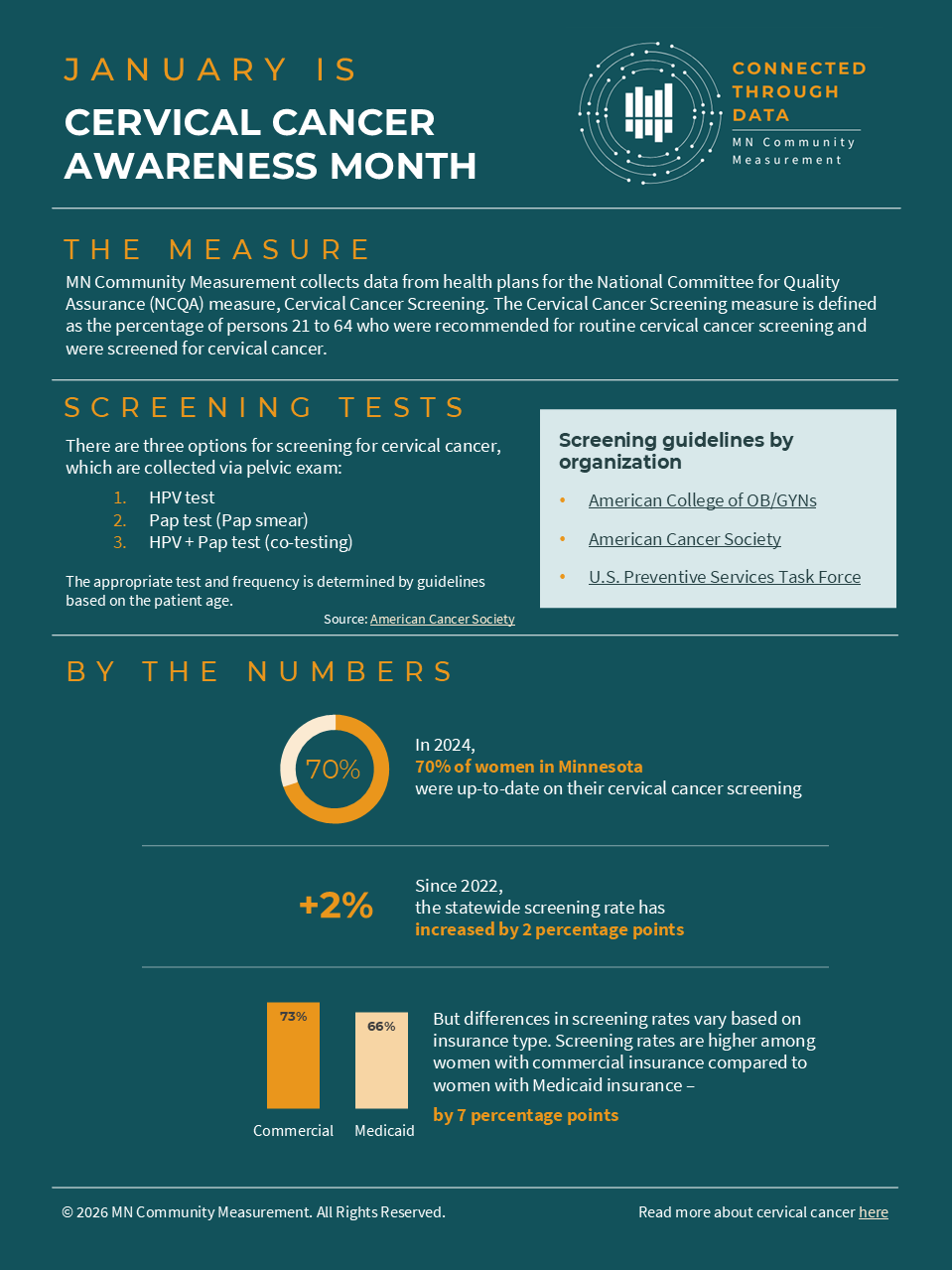
Click to view infographic

MINNEAPOLIS, Minn. — October 20, 2026 — MN Community Measurement (MNCM) today announced that it has completed its acquisition of Koble-MN's health information exchange (HIE) business line and the MNSHINE brand from The Koble Group. On November 1, MNCM will officially change its legal name to Minnesota Statewide Health Information Network and Exchange, known as MNSHINE. The transition follows a special joint meeting of MNCM's Board of Directors and members on October 12, at which the Board unanimously approved resolutions authorizing the acquisition, changing the organization's legal name, and establishing a new HIE Advisory Committee. Members unanimously adopted the name change and related amendments to the organization's Articles of Incorporation and Bylaws. An intentional decision to collaborate The transition is the result of an intentional decision by Minnesota health care leaders to collaborate on a health data landscape that makes sense: one that reduces redundancy, increases efficiency, and delivers needed information to those with legal authorization to receive it, where and when it is needed, without unnecessary administrative barriers. "This is not simply a merger of services. It is a deliberate choice to build the kind of health data infrastructure Minnesota deserves," said Liz Cinqueonce, President and CEO of MNCM. "For too long, organizations across our state have had to navigate duplicative systems and disconnected data. By bringing measurement and exchange together, we can reduce that burden and make sure the right information reaches the right people at the right time, with patient privacy protections firmly in place, so they can focus on improving care." The effort builds on months of work by the Executive Leadership Council, convened earlier this year by MNCM, the Minnesota Electronic Health Records Consortium, and Koble to explore how a sustainable, statewide health data utility could serve the public interest. "Minnesota is at its best when we take on difficult challenges together and align on solutions," said Mark Steffen, MD, Chair of the MNCM Board of Directors. "The Board's unanimous support reflects a shared conviction that our future depends on organizations keeping their unique strengths and missions while participating in shared infrastructure and governance. That balance is what enables greater coordination, transparency, efficiency, and impact." A trusted backbone for Minnesota's health data Minnesota's future health data ecosystem is one in which organizations retain their unique strengths and missions while participating in shared infrastructure and governance. The vision for MNSHINE is to become the health data utility, governed in the public interest with strong privacy protections and transparency, that serves as the trusted backbone connecting these efforts, ensuring data can be used more effectively to improve health, wellbeing, and outcomes for all Minnesotans. By bringing the measurement of health care quality, cost, and utilization together with the infrastructure that moves clinical data between organizations, MNSHINE will be positioned to support providers, payers, public health, researchers, policymakers, and communities alike, each within the limits of applicable law and participant agreements. The goal is healthier people, stronger communities, greater equity, better public decisions, smarter investments, and a health system that learns continuously. Continuity for HIE participants HIE services will continue without interruption. To ensure continuity of leadership and relationships, Chad Peterson, CEO of The Koble Group, has joined MNCM as Senior Vice President of HIE Services. “For HIE participants, this transition opens new possibilities,” said Peterson. “When exchange and measurement are guided by one mission, we can reduce duplication for providers and better support care coordination, while holding firm to the privacy protections patients expect. I’m proud to help lead that work, and I’m committed to making sure every participant feels supported as we grow.” MNCM has also established the HIE Advisory Committee as a standing committee of its Board of Directors. The committee continues the work of the Koble-MN Advisory Committee and will advise the Board on interoperability, participant relationships, privacy, security, data governance, and health equity. Jennifer Lamprecht of Sanford Health and Dr. Justine Mrosak of Hennepin Healthcare have been appointed to co-chair the committee, which will include consumer representatives alongside members representing a cross-section of Minnesota's health care community. Protecting patient privacy This transition changes who operates Minnesota's health information exchange. It does not change how patient information is protected or who may access it. MNSHINE will continue to operate in compliance with HIPAA and the Minnesota Health Records Act, which is among the strongest patient-consent laws in the nation, and in compliance with the participant agreements that govern how information is exchanged. Health information exchange and measurement will each remain governed by their own legal and contractual requirements, and bringing them into one organization does not change the purposes for which patient information may be used.

Aligning for Impact: From Momentum to Action A 2026 Leadership Series from the MNCM Board Chair & President

Aligning for Impact: From Vision to Momentum A 2026 Leadership Series from the MNCM Board Chair & President
MNCM’s President & CEO Liz Cinqueonce Joins Great Lakes Executive Leadership Council Advances Regional Collaboration and Quality Improvement
MN Community Measurement Recognizes Innovation and Collaboration in Clinical Quality Measurement